We Power Your Technology!



Two batteries may have the same rated capacity, but will they deliver the same performance in an electronic shelf label?
As Electronic Shelf Labels (ESLs) become thinner, more functional, and increasingly used in low-temperature environments, battery selection is no longer just about capacity. Pulse current, operating temperature, and available installation space all affect how reliably an ESL performs over time.
Depending on the specific ESL design and application, battery requirements may include:
Wide operating temperatures: ESLs may need to operate in different environments, including temperatures of -20°C, 10°C, and 45°C.
High pulse current: Depending on the device and operating mode, pulse loads may reach 10 mA or 600 mA.
Frequent pulse discharge: Some applications require pulse intervals as short as 1.6 or 15 seconds.
Long service life: Certain ESL applications require five years or more of operation.
Battery thickness, installation space, reliability, and cost are also important considerations.
Today, Li-MnO₂ coin cells and Li-MnO₂ pouch cells are two primary lithium battery options for ESL applications. Although both use the same 3.0 V chemistry, differences in cell structure can affect their actual discharge performance.
A battery's high-current discharge capability is closely related to its electrode structure, effective reaction area, internal resistance, and electrochemical polarization.
Traditional coin cells generally feature compact electrode structures, making them suitable for standardized, low-power applications.
In comparison, Li-MnO₂ pouch cells designed for higher pulse loads can use optimized electrode structures and larger effective reaction areas to reduce internal resistance and improve voltage response under demanding loads.
Even when two batteries have similar rated capacities, their usable capacity and discharge performance under actual ESL operating conditions may differ significantly.
Rated capacity is measured under specified test conditions, while actual usable capacity depends on discharge current, operating temperature, cut-off voltage, and load profile.
For ESLs, batteries must support both low-power standby operation and periodic high-current activities, such as wireless communication and display updates.
If a high pulse load causes the battery voltage to drop below the device's cut-off voltage, the ESL may stop functioning even when some capacity remains.
By optimizing internal structures and discharge characteristics, Li-MnO₂ pouch cells can improve capacity utilization under specific load conditions, potentially supporting longer device operation.
ESL current consumption varies between standby and active operation. During wireless communication, data transmission, display refreshes, or LED operation, current demand may increase significantly for short periods.
Li-MnO₂ pouch cells designed for pulse loads can use larger effective electrode reaction areas and low-resistance structures to improve voltage performance during high-current discharge.
For ESLs requiring frequent communication or display updates, pulse discharge performance is an important consideration in battery selection.
In frozen food displays and cold-chain storage environments, ESLs may need to operate at temperatures as low as -20°C.
Low temperatures slow electrochemical reactions and increase polarization, making voltage drops under high-current loads more pronounced.
Through optimized cell structures and materials, Li-MnO₂ pouch cells designed for low-temperature applications can improve discharge performance, helping ESLs complete communication, wake-up, and display refresh tasks.
Actual performance should be verified based on the specific battery model, load profile, and device cut-off voltage.
ESLs typically feature thin, rectangular designs, making battery dimensions and internal space utilization important considerations.
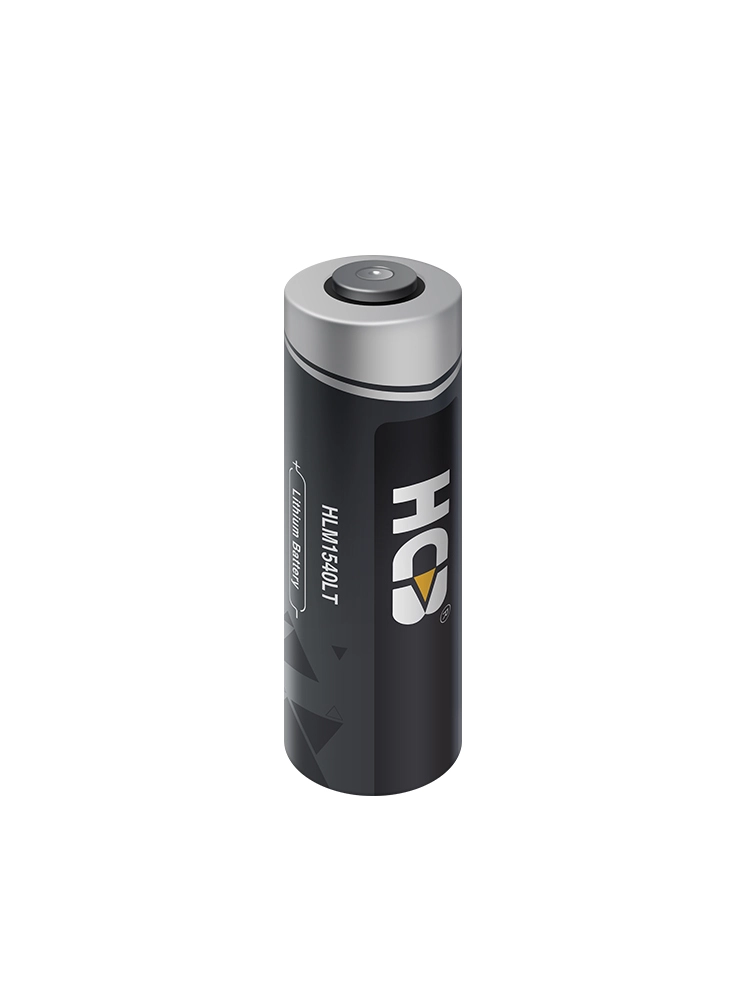
Traditional coin cells have standardized circular structures, which may leave unused space inside rectangular battery compartments.
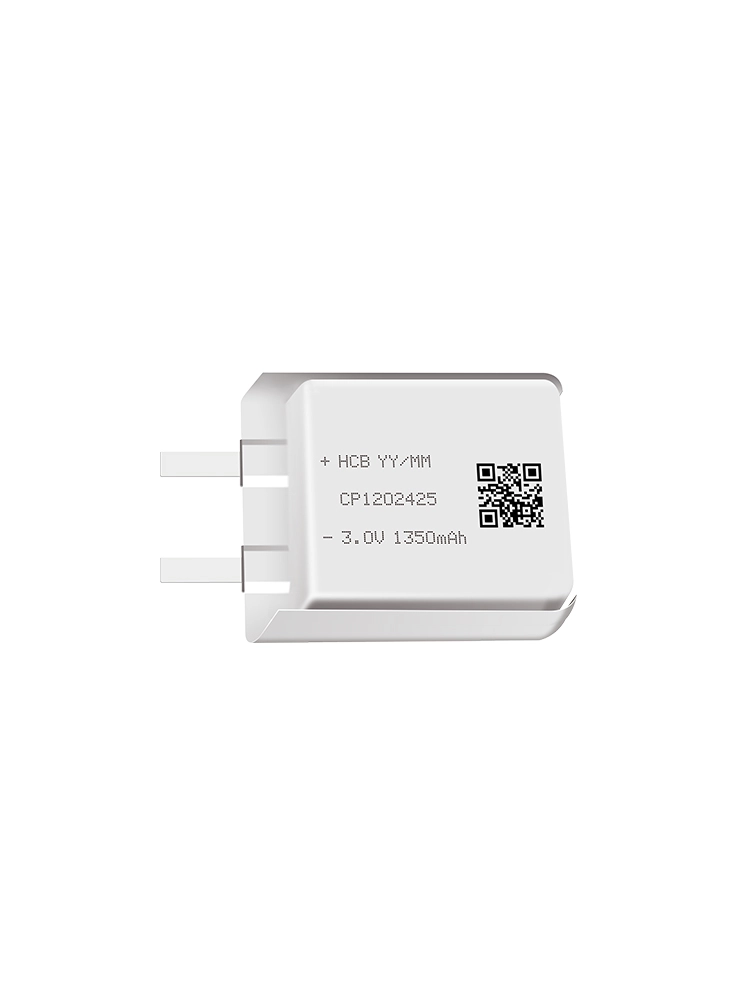
In comparison, Li-MnO₂ pouch cells use aluminum-laminated film packaging, allowing greater flexibility in length, width, and thickness.
For ESL manufacturers, this provides more options for optimizing device layout, available space, and battery capacity.
ESLs are often deployed in large quantities, making battery replacement an important consideration for labor, maintenance, and operating costs.
Battery reliability depends not only on discharge performance but also on long-term storage characteristics, sealing integrity, electrical connections, and manufacturing consistency.
In applications requiring multiple coin cells, a single pouch cell that meets the device's voltage, capacity, and load requirements may reduce inter-cell connections and assembly steps.
Combined with stable manufacturing processes, quality control, and long-term reliability validation, a properly designed pouch-cell solution can help reduce potential failure risks in the power system.
HCB Battery pioneered the development and manufacturing of primary Li-MnO₂ pouch batteries in China. With proprietary technologies, multiple structural patents, and in-house R&D and manufacturing capabilities, HCB Battery delivers slim, compact battery designs with reliable performance for ESL applications.
Better space utilization
HCB Battery's Li-MnO₂ pouch cells feature lightweight, slim designs with customizable dimensions, helping manufacturers maximize available space and develop compact ESL products.
Low internal resistance & high pulse performance
HCB Battery's Arrow Series uses a proprietary patented cathode formulation designed to improve electrochemical reaction efficiency and reduce internal resistance.
This helps enhance pulse discharge performance and usable capacity, supporting demanding ESL applications such as wireless communication and display updates.
Long-term sealing integrity
HCB Battery uses high-strength, five-layer composite aluminum-laminated film and a four-stage sealing process to improve sealing reliability and reduce the risk of electrolyte leakage.
Consistent product quality
High-precision automated production and strict process controls help minimize batch-to-batch performance variations, supporting consistent cell quality and long-term power reliability.
With proprietary patented technologies and in-house R&D and manufacturing capabilities, HCB Battery supports OEM customization based on:
Device dimensions and available installation space
Battery capacity requirements
Pulse loads and discharge characteristics
Operating temperatures
From cell design and sample validation to mass production, we provide engineering support throughout product development.
The battery should fit the device design, not limit it.
For ESL applications, what matters is not simply the rated capacity in mAh, but how much of that capacity the device can actually use under real load and environmental conditions.
Coin cells remain a practical choice for standardized, low-power applications. For ESL designs with demanding pulse loads, limited installation space, or challenging operating temperatures, Li-MnO₂ pouch cells offer another option worth evaluating.
If you are developing or optimizing ESL products, contact HCB Battery to discuss battery selection, load characteristics, and customized power solutions.
HCB Battery — We Power Your Technology.
Looking for a reliable battery solution for your ESL design?
Explore HCB Battery's Li-MnO₂ pouch cells and customized power solutions for your specific application requirements.
Explore Li-MnO₂ pouch cells Contact us English